
Is cracking your knuckles bad for you?
Does cracking your knuckles cause arthritis? Research doesn't back that fear. Where the sound comes from, the urge to keep cracking, and when to see a doctor.
You've just finished another email, so you lace your fingers together and push them forward. Pop. From the next desk comes the same warning as always: "Stop that, you'll get arthritis." The short answer: there's no evidence that cracking your knuckles wears out your joints or leads to arthritis. A study that compared habitual knuckle crackers with people who never crack found no difference in how often they had arthritis in their hand joints.
Why do my knuckles make that sound?
When the joint surfaces move slightly apart, the pressure of the fluid inside drops and a small cavity forms from dissolved gas. An MRI study from 2015 watched this happen in real time: the sound comes at the moment the cavity forms. It's also why you can't crack the same knuckle again right away; the gas takes about twenty minutes to dissolve back.
The fine crunching you hear throughout a movement belongs to a different family. That's the sound of surfaces and tendons sliding over one another. As long as there's no pain, swelling or catching alongside it, neither one is a sign of damage by itself.
Why do I feel the need to crack all the time?
First, an honest note. An older, smaller study reported slightly lower grip strength in people who crack their knuckles. That finding was never repeated, so it's hard to say anything certain here.
What's really worth looking at is something else. If you feel the urge to crack the same spot many times a day, the relief is short-lived and the tension underneath stays put. The answer isn't to chase the sound more often; it's to move that area. And pushing your neck or lower back to the end of its range with a sudden jerk doesn't count as cracking. That's forcing it.
It also helps to notice this: when does the urge show up most? After a long stretch of sitting? In the middle of a tense meeting? Fasya is a 5-minute-a-day mobility app, and every session starts by asking how your body feels. That small question can make it easier to see the need behind the cracking reflex. If you're curious how freely your joints move, the free movement test is a good place to start.
Frequently asked questions
- Does cracking your knuckles cause arthritis?
- According to the best data we have, no. No difference in how often hand arthritis occurred was found between habitual knuckle crackers and people who never crack them.
- Is cracking your neck dangerous?
- A pop that happens on its own isn't a problem by itself. Forcing your neck to the end of its range with a sudden jerk is something else; moving your neck slowly, within a comfortable range, is the better choice.
- Why can't I crack the same knuckle again right away?
- The gas cavity that makes the sound takes time to dissolve back. That takes about twenty minutes, and until then you usually won't get a second pop from the same joint.
Sources
Sources are taken from the expert-reviewed content cards in Fasya's knowledge base.
- Knuckle cracking and hand osteoarthritis — deWeber K, Olszewski M, Ortolano R, 2011
- The effect of habitual knuckle cracking on hand function — Castellanos J, Axelrod D, 1990
- Real-time visualization of joint cavitation — Kawchuk GN, Fryer J, Jaremko JL, et al., 2015
- 'Cracking joints': a bioengineering study of cavitation in the metacarpophalangeal joint — Unsworth A, Dowson D, Wright V, 1971
- Surgical management of degenerative meniscus lesions: the 2016 ESSKA meniscus consensus — Beaufils P, Becker R, Kopf S, et al., 2017
- Knee pain – assessment (Clinical Knowledge Summaries) — National Institute for Health and Care Excellence, 2022
This article is for information only; it does not diagnose and is no substitute for an examination. If your symptoms persist, see a clinician.
Related articles
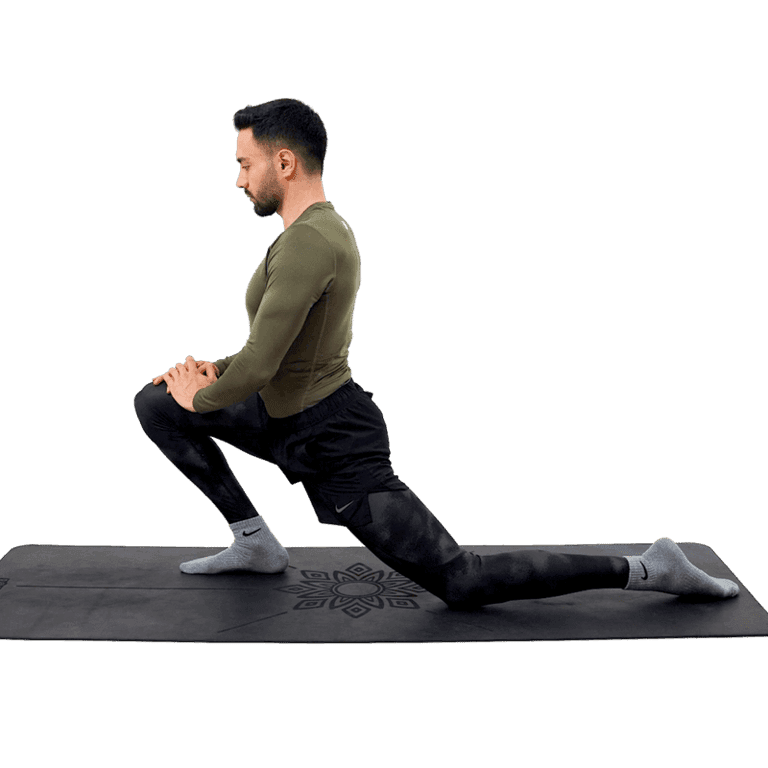
Your lower back hurts. Could the problem be your hips?
Plenty of videos tell you your lower back pain is "really a hip problem". The lower back and hips do meet in the same fascial layer, but the evidence for blaming the hips alone is weak. When does training the neighbouring region help, and where does the evidence stop?
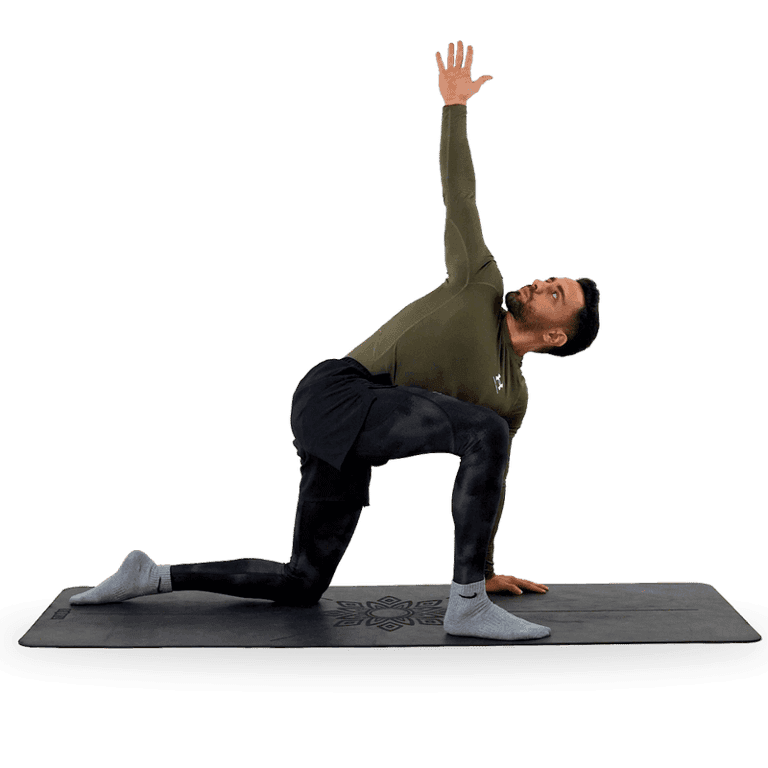
Reaching, bending, turning: why does the body move as one piece?
When you reach for a shelf or get up from a chair, your whole body is involved. How muscles connect through fascia, which myofascial lines really exist, and the simplest way to train everyday movements as a whole.
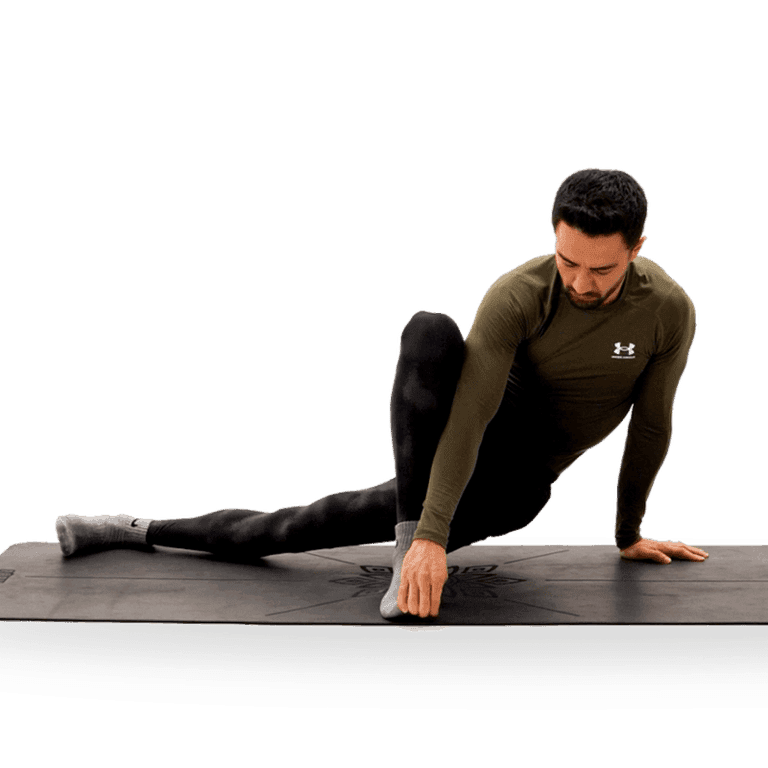
How should you stretch?
There's no one number of seconds to hold a stretch that fits everyone. Why does a stretch get easier the longer you hold it, do muscles actually lengthen, and what should you look at instead of seconds for lasting flexibility?