
How should you stretch?
How long should you hold a stretch? Why it gets easier as you hold it, whether muscles really lengthen, when lasting flexibility comes, how often to stretch.
You're bent forward and your fingertips only just reach your shins. The back of your leg is burning, you're holding your breath, you're about to give up. Wait a little and the same position becomes bearable; your hands even sink a bit lower.
There's no exact number of seconds to hold a stretch that fits everyone. In a 2024 meta-analysis, no clear link turned up between the total time spent stretching and the range of motion gained. Instead of watching the clock, go by feel: stay in the position for a few slow breaths, until that demanding tension softens.
Why does a stretch get easier the longer you hold it?
Two things are happening at once. The first is the tissue. Connective tissue carries both elastic fibres and a gel-like ground substance; it behaves somewhere between rubber and honey (viscoelastic). Materials like this stiffen when pulled quickly and lengthen more easily when pulled slowly. When you wait in a position, the force needed to hold it also drops somewhat over time (stress relaxation). That's a general property of such materials; how much of a role it plays in your own stretch isn't clear.
The second is the nervous system. When the body reaches an angle it can't control, it gets cautious and protects itself by tensing up. The more calmly you stay in the position and the more you repeat it, the less it tenses at the same angle. It's one reason the second rep feels easier than the first.
Does stretching lengthen muscles?
Not right away. Being able to go further after stretching mostly comes not from the muscle getting longer but from your body getting used to the tension. As we explained in the mobility article, there are two separate processes here:
- Quick opening, within minutes. Your nervous system decides "this angle isn't dangerous" and puts up less resistance in the same position. That's the ease you feel right after a session. It's real, but short-lived: it fades within minutes.
- Lasting change, over weeks. This time the tissue itself adapts. For a measurable difference in tendon and connective tissue, studies usually need 8 to 12 weeks of regular loading.
How much stretching on its own changes the tissue, we don't know for sure yet. The claim that "if you hold it long enough, your fascia remodels" is popular, but no study has shown it in humans.
So the real question isn't "how many seconds did I hold it" but "where can I get to a few weeks from now". To see that, you first need to know where you are today. The movement test in Fasya measures exactly that with a few short questions.
How do you stretch properly?
- Warm up first. A few minutes of walking, or circling your hips and shoulders, is enough. Warm tissue lengthens with less resistance; tissue that has gone heavy from sitting still loosens up with the first movements. The slipperiness between tissue layers is also thought to be kept up by movement and warmth, though that part is still being researched.
- Ease in, don't bounce. Tissue lengthens more easily when it's loaded slowly. Force it in sudden, jerky bursts and the body switches to protecting itself by tensing.
- Watch your pain threshold. A mild feeling of tension is enough. If there's burning, stabbing or sharp pain, stay within your limits and don't push any further.
- Count breaths, not seconds. Breathe out slowly and settle a little deeper into the position with each exhale. Once the tension softens, either go a bit further or let go.
- A few reps, often. The first rep is always the hardest. A short round every day is easier to keep up than one long session a week.
Morning stiffness easing off within 10 to 30 minutes of moving, as it does for most people, is the same warm-up logic in everyday life.
Measure your progress in how far down you can get, not in seconds: try the same movement again a few weeks apart. Fasya is a 5-minute-a-day mobility app, and its free movement test is there for exactly that comparison.
Frequently asked questions
- How long should you hold a stretch?
- There's no proven duration that fits everyone; in a meta-analysis, no clear link turned up between the total time spent stretching and the range gained. A practical measure: stay in the position for a few slow breaths, until the tension softens.
- Does stretching really lengthen your muscles?
- Mostly not in the short term. Most of the loosening you feel after stretching comes from your body getting used to the tension. Lasting change in the tissue takes weeks, and how much stretching alone contributes to it is still unclear.
- Why does a stretch get easier the longer you hold it?
- Because both the tissue and the nervous system respond to time. Under steady tension the tissue's resistance drops somewhat, and the nervous system starts seeing the position as less of a threat and eases off its protective tensing.
- Do you have to warm up before stretching?
- It isn't essential, but it helps. Warm tissue lengthens with less resistance and the stiffness of the first reps passes faster; a few minutes of walking is enough.
Sources
Sources are taken from the expert-reviewed content cards in Fasya's knowledge base.
- Chronic effects of stretching on range of motion with consideration of potential moderating variables: a systematic review with meta-analysis — Konrad A, Alizadeh S, Daneshjoo A, et al., 2024
- Increasing muscle extensibility: a matter of increasing length or modifying sensation? — Weppler CH, Magnusson SP, 2010
- Decrements in stiffness are restored within 10 min — Mizuno T, Matsumoto M, Umemura Y, 2013
- Biomechanical responses to repeated stretches in human hamstring muscle in vivo — Magnusson SP, Simonsen EB, Aagaard P, Kjaer M, 1996
- Thixotropy in skeletal muscle and in muscle spindles: a review — Proske U, Morgan DL, Gregory JE, 1993
- Warm up I: potential mechanisms and the effects of passive warm up on exercise performance — Bishop D, 2003
- Human tendon adaptation in response to mechanical loading: a systematic review and meta-analysis of exercise intervention studies on healthy adults — Bohm S, Mersmann F, Arampatzis A, 2015
- Hyaluronan within fascia in the etiology of myofascial pain — Stecco C, Stern R, Porzionato A, Macchi V, Masiero S, Stecco A, De Caro R, 2011
- In vivo diurnal variation in intervertebral disc volume and morphology — Botsford DJ, Esses SI, Ogilvie-Harris DJ, 1994
- Effect of number of home exercises on compliance and performance in adults over 65 years of age — Henry KD, Rosemond C, Eckert LB, 1999
- Delayed onset muscle soreness: treatment strategies and performance factors — Cheung K, Hume PA, Maxwell L, 2003
This article is for information only; it does not diagnose and is no substitute for an examination. If your symptoms persist, see a clinician.
Related articles
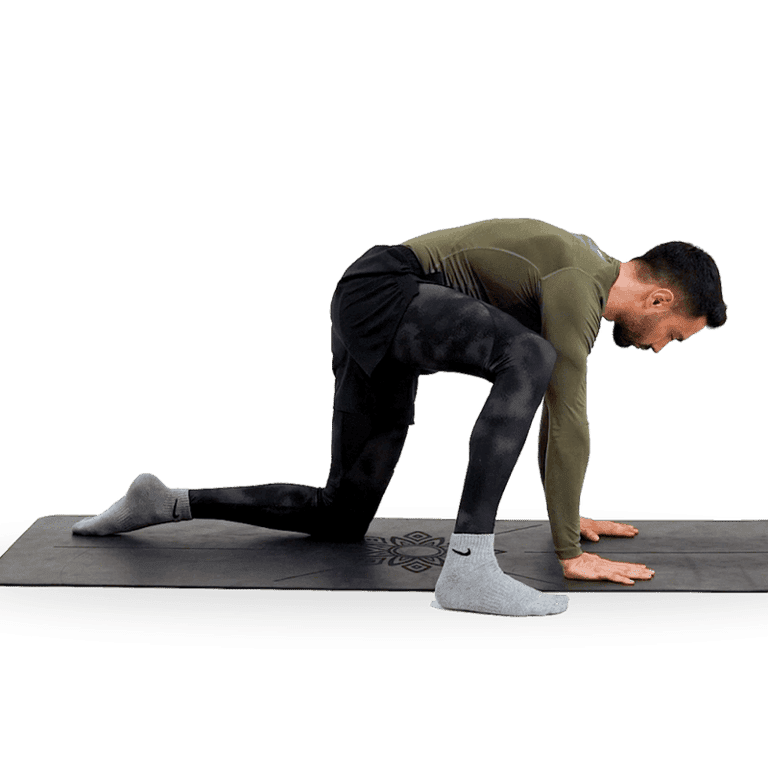
What is mobility? How is it different from flexibility?
Your leg opens up to a point, but can you get there under your own power? That is the question that separates mobility from flexibility. What research says about stretching, and a practical path that takes a few minutes a day.
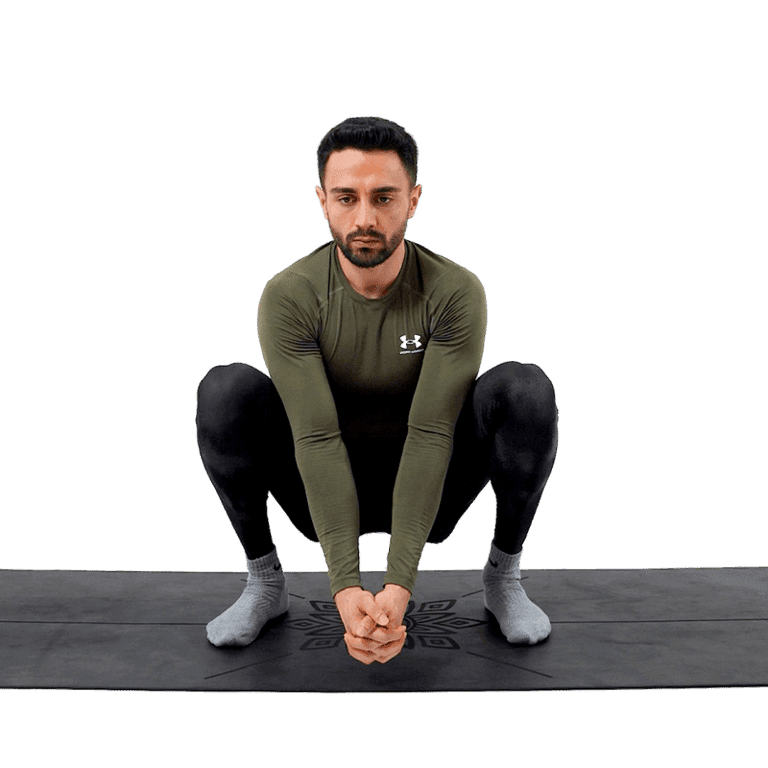
The stiffness that comes with age: how much is age, how much is inactivity?
At twenty-five you sat down on the floor and got up without a thought; at forty-five an "oof" came along with it. Some things really do change in connective tissue with age, but part of the stiffness you feel is not age, it is movement you no longer use.
What is fascia? The web that makes the body one piece
Everyone talks about fascia, but few explain what it is. From the skin of an orange to nerve endings: what fascia really is, which claims rest on evidence, and why listening to your body is a skill you can learn.