What helps lower back pain?
What helps lower back pain? Guidelines point the same way: stay active, exercise regularly, try heat early on. Plus bed rest, MRI and when to see a doctor.
You bent down this morning to put on your socks and your lower back suddenly said "no". It took two tries to straighten up. Now there is one question on your mind: what actually helps lower back pain?
The short answer: staying active. The first step guidelines agree on is carrying on with daily life as far as the pain allows. Regular exercise comes next; which kind matters less than whether you can keep it up. In the first few days, superficial heat can also ease things a little. Lying in bed and getting an MRI straight away are not at the top of the list.
Why is lower back pain so common?
First, know this: you are not alone. A 2018 review in The Lancet named lower back pain as one of the leading causes of disability worldwide. The vast majority of people go through it at some point in their lives.
There is no single reason it is so widespread. The lower back is exposed to many influences at once: sleep, how much you move over the day, sudden jumps in load, stress, past episodes. None of them decides things on its own, but they can stack up.
The surprising part is that in most cases the pain cannot be tied to a single tissue. Doctors call this "non-specific low back pain". It may sound like "we found nothing". It is not. Once serious and specific causes have been ruled out, what remains usually runs a good course.
The timeline backs this up. A 2012 meta-analysis showed that new lower back pain eases markedly in the first six weeks and then improves more slowly. Coming back is common too. That does not count as failure; it is simply how the lower back is known to behave.
Is it better to rest or to move with lower back pain?
When the pain starts, the first reflex is to lie down. It is an understandable reflex, but the evidence is not on its side.
A Cochrane review comparing the advice "rest in bed" with "stay as active as you can" in acute lower back pain found a small advantage for staying active, in both pain and daily function. In pain that radiates down the leg (sciatica), there was no clear difference between the two. So lying down does not speed up recovery. England's national guideline also recommends continuing with daily life as much as possible when you have lower back pain.
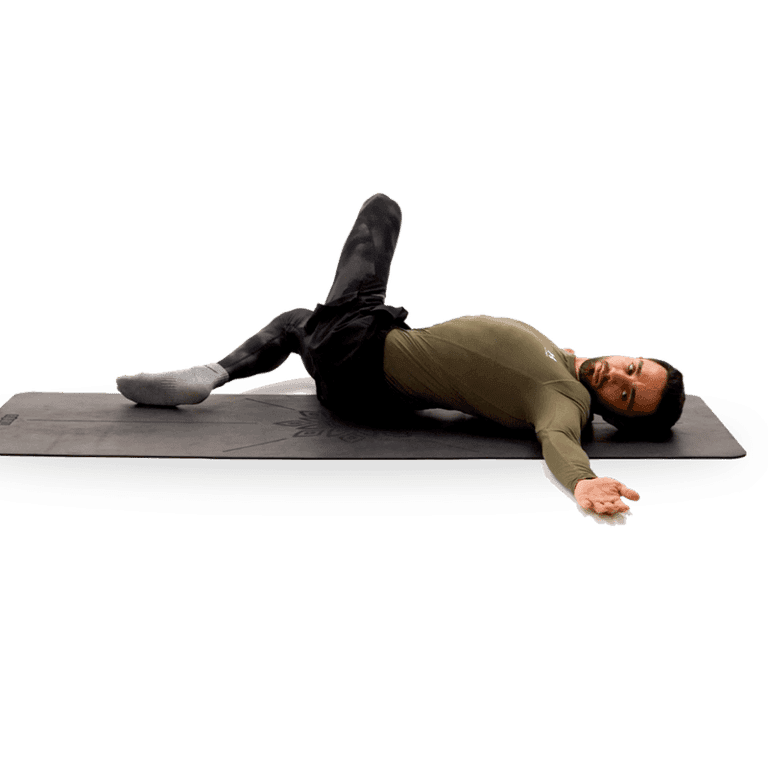
That does not mean ignoring your pain. In the first days, short walks, frequent changes of position and gentle movement that does not bother you are enough. Then you build up gradually.
Which exercise helps lower back pain?
Honesty is needed here: we do not know for sure what the "best" exercise for the lower back is. Large reviews support that exercise reduces pain and improves daily function in lower back pain that drags on. But when walking, strength training, Pilates or water-based exercise are compared, the differences between them are small. What decides it is choosing something you can keep doing regularly.
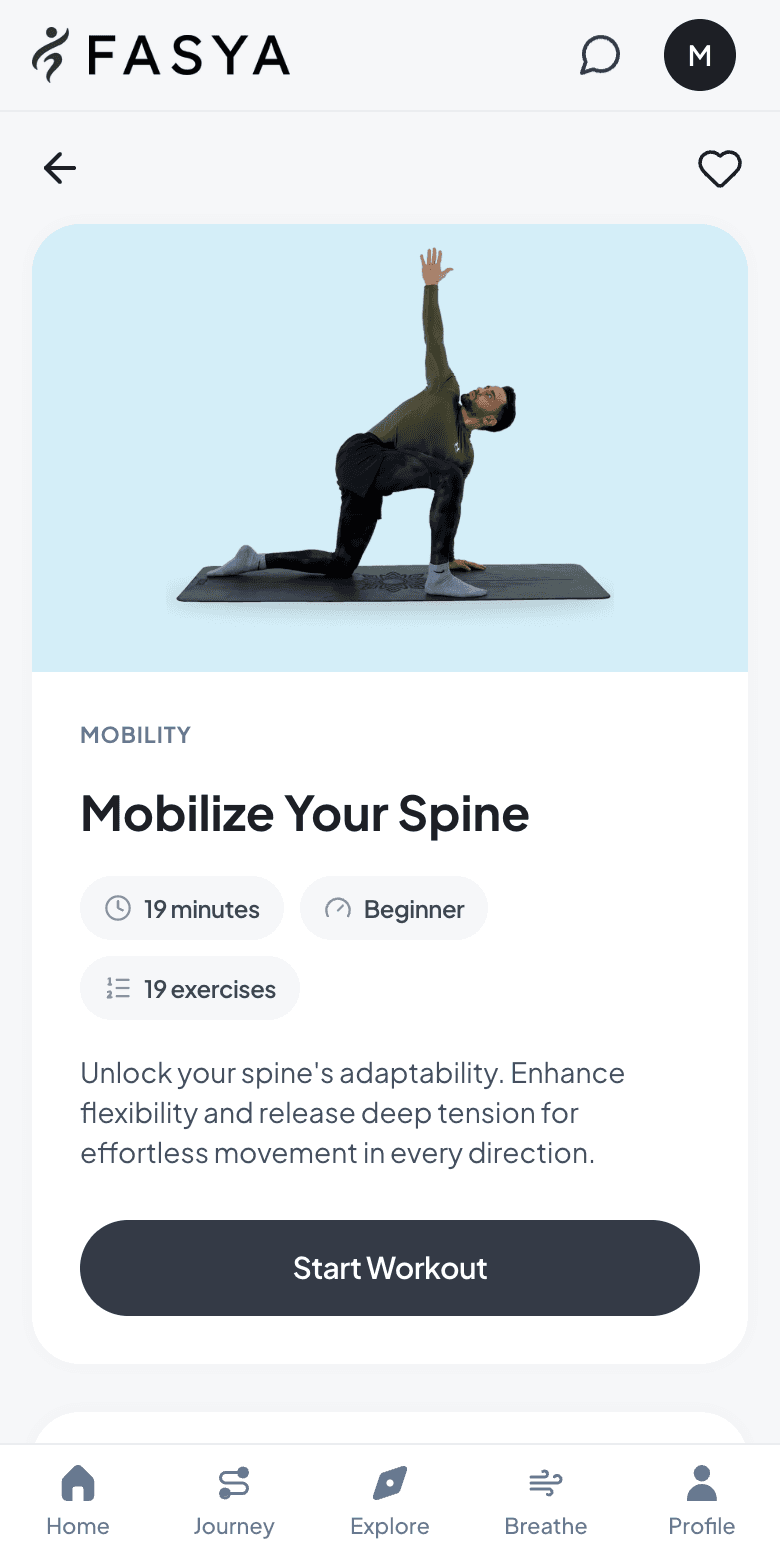
So the real question is not "which movement?" but "which movement can I keep doing for weeks?". Also bear in mind that the lower back does not work alone. When you bend, get up or turn, your hips and upper back are involved too. That is why, instead of repeating a single lower back exercise, a sequenced plan that includes the neighbouring regions is easier for most people to stick with. The Mobilize Your Spine workout in the app is a 19-minute starting point that moves the spine in every direction. We covered the role of the hips in can tight hips cause lower back pain.
What to do in the first days of lower back pain
Turning a painful morning into concrete steps:
- Carry on with your day. Go to work, move around the house, do the tasks you can. Doing some movements more slowly for a while is normal.
- Go for short walks. A few short walks spread through the day are easier to keep up than one long one.
- Do not stay in the same position for long. Get up now and then when sitting, change sides when lying down. The lower back does not seem to like staying still.
- Try heat in the first days. A hot water bottle or a warm shower can help; superficial heat has been shown to have a modest but real benefit.
- Do not rush to get an MRI. Without a warning sign, routine imaging is not recommended as a first step. In most cases it changes neither the course nor what you should do.
How much and how often should you move?
There is no exact dose that applies to everyone; guidelines say "stay active" rather than giving numbers. In practice, the measure that works is this: pain may rise a little while you move, but the next morning you should not be worse than where you started. If so, the amount suits you.
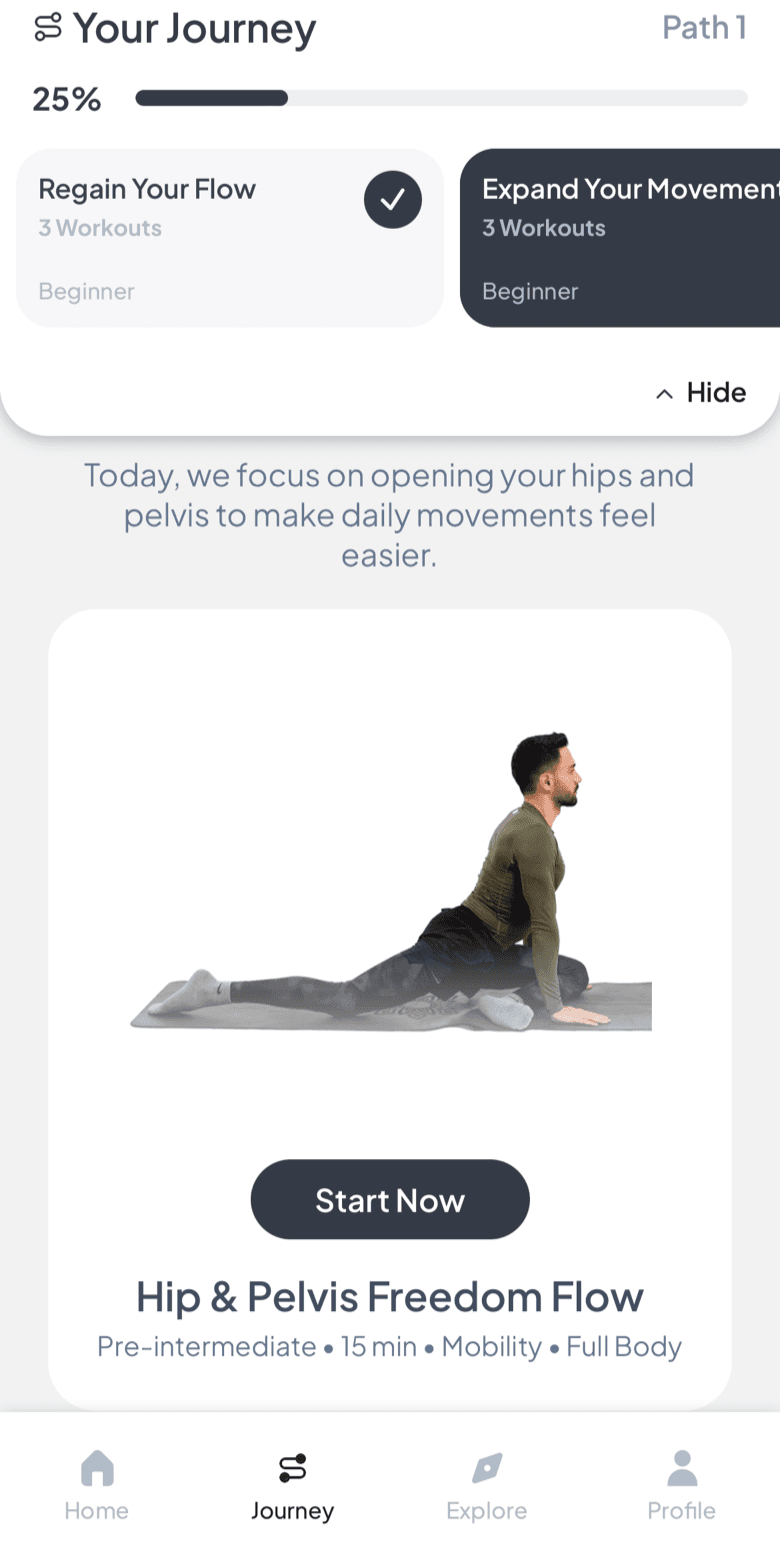
Once the pain starts to settle, shift towards exercise. Set up a routine you can keep for a few days a week over several weeks. For most people, short and frequent sessions are easier to repeat than one long session. Fasya is a mobility app built on the same logic; its Personal Journey puts short, connected workouts in front of you in sequence.
The sense of progress can also come slowly. Some days your lower back is more sensitive, other days you almost forget about it. This up and down is expected. A bad day does not mean you did something wrong; your sleep, your stress or the total load of that day can also affect how strong the pain is. On days like that, rather than dropping the plan, you can lower the dose a little and keep going.
In short
What helps lower back pain most is staying active as far as the pain allows. Lying down does not speed up recovery, and which exercise you choose matters less than doing it regularly. You can try heat in the first days, and without a warning sign there is no need to rush to an MRI. The pain often eases markedly in the first weeks. If it comes back, you have not lost; you go back to the same steps.
Frequently asked questions
- Is heat good for lower back pain?
- Superficial heat in the first days has been shown to have a small but real benefit. A hot water bottle or a warm shower is enough; pick a temperature that will not burn your skin.
- Can I walk with lower back pain?
- In most cases yes, short walks are a good start. Staying active gives slightly better results than lying down to rest; walk as much as the pain allows, then build up slowly.
- Do I need an MRI for lower back pain?
- Usually not, if there is no warning sign. Guidelines do not recommend routine imaging as a first step, because in most cases it changes neither the course nor what you should do.
- How long does lower back pain take to go away?
- New lower back pain often eases markedly in the first six weeks, then improves more slowly. If there is no clear relief after six weeks, it is a good idea to see a doctor.
Sources
Sources are taken from the expert-reviewed content cards in Fasya's knowledge base.
- Low back pain and sciatica in over 16s: assessment and management (NG59) — National Institute for Health and Care Excellence (NICE), 2020
- Prevention and treatment of low back pain: evidence, challenges, and promising directions — Foster NE, Anema JR, Cherkin D, et al., 2018
- Noninvasive treatments for acute, subacute, and chronic low back pain: a clinical practice guideline from the American College of Physicians — Qaseem A, Wilt TJ, McLean RM, Forciea MA, 2017
- Exercise therapy for chronic low back pain — Hayden JA, Ellis J, Ogilvie R, Malmivaara A, van Tulder MW, 2021
- What low back pain is and why we need to pay attention — Hartvigsen J, Hancock MJ, Kongsted A, et al., 2018
- The prognosis of acute and persistent low-back pain: a meta-analysis — Menezes Costa L da C, Maher CG, Hancock MJ, McAuley JH, Herbert RD, Costa LOP, 2012
- Advice to rest in bed versus advice to stay active for acute low-back pain and sciatica (Cochrane Review) — Dahm KT, Brurberg KG, Jamtvedt G, Hagen KB, 2010
- Red flags to screen for malignancy and fracture in patients with low back pain: systematic review — Downie A, Williams CM, Henschke N, et al., 2013
- Assessment and management of cauda equina syndrome — Greenhalgh S, Finucane L, Mercer C, Selfe J, 2018
- International Framework for Red Flags for Potential Serious Spinal Pathologies — Finucane LM, Downie A, Mercer C, et al., 2020
This article is for information only; it does not diagnose and is no substitute for an examination. If your symptoms persist, see a clinician.